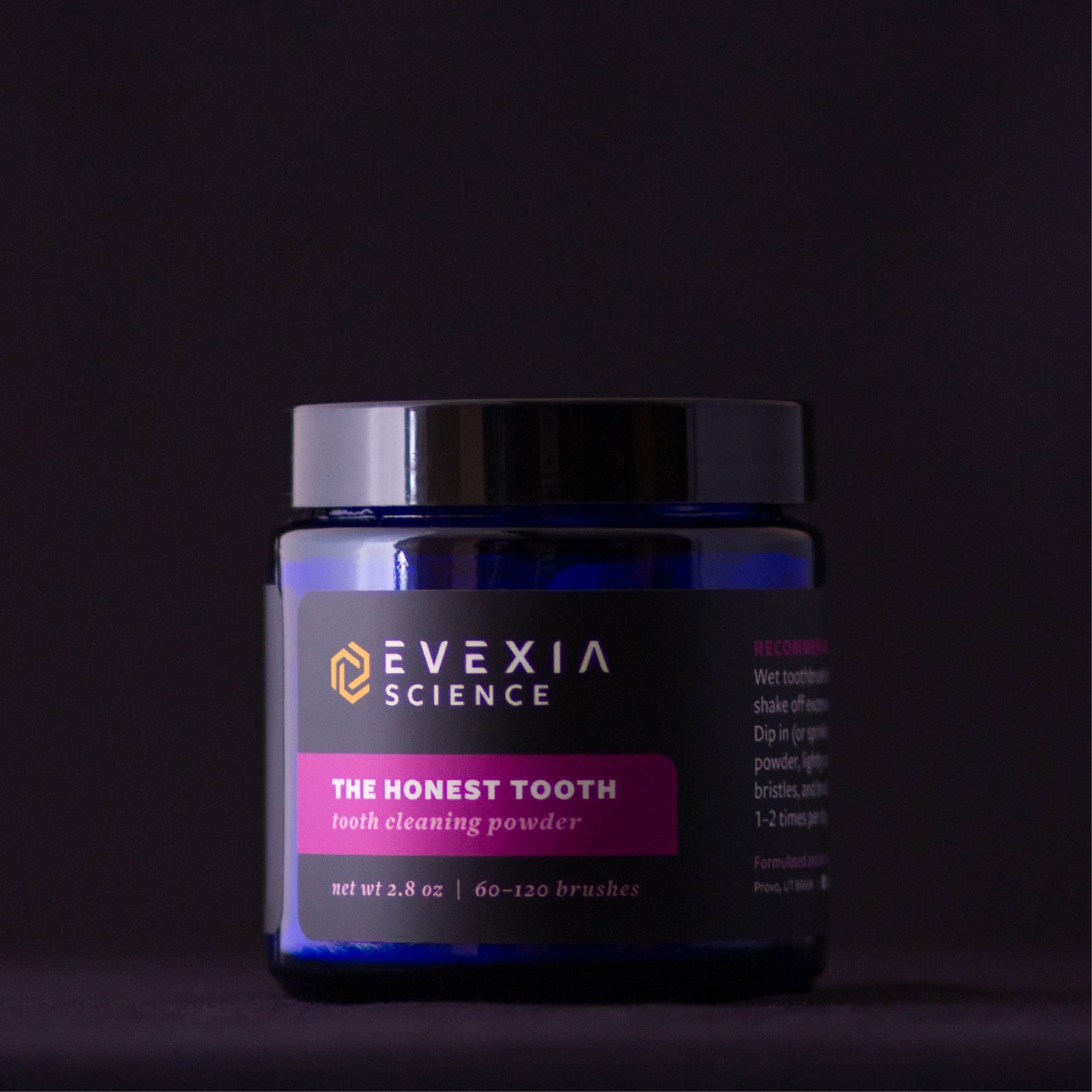
HOW THE HONEST TOOTH WORKS
Tooth decay and bad breath are caused by acid- and odor-producing bacteria. The Honest Tooth is formulated with baking soda which alkalizes the mouth to neutralize tooth-eating acids, as well as cleans and polishes teeth to fight plaque. It also contains antimicrobial compounds such as monolaurin, xylitol, cinnamon oil, and clove oil which kill harmful microbes in the mouth.
INGREDIENT HIGHLIGHTS
BAKING SODA (SODIUM BICARBONATE)
Baking soda is the primary ingredient in The Honest Tooth. It serves multiple functions. What you will notice first, immediately after brushing, is that the fine, soft granules in baking soda polish your teeth, making them feel very smooth and clean. But the most important function of baking soda is to alkalize the mouth and neutralize acids. If you took a science class, you might remember the pH scale, which measures the number of positive hydrogen ions in the water. The scale ranges from 1 to 14, with neutral in the middle at 7, acids less than 7, and bases (alkaline) greater than 7. Acids react with alkaline things to cancel each other out, producing neutral things. Your teeth are naturally alkaline and acids produced by bacteria will eat your teeth. Baking soda reacts with the acids produced by bacteria to protect your teeth from tooth decay.
XYLITOL
Xylitol is a 5-carbon sugar alcohol, or reduced sugar, that is found in many plants including plums, strawberries, cauliflower, and pumpkin, but is most commonly extracted from corn and birch trees. Bacteria cannot eat xylitol and thus it provides a nice sweetening component that won’t cause tooth decay. On top of this, xylitol has antibacterial and antiplaque properties that help keep your teeth healthy.
S. mutans is a bacterium that is a significant contributor to tooth decay. S. mutans creates a biofilm that allows it to stick on the surface of teeth and protect it from brushing. This biofilm is what we call plaque, and if it’s not removed it can cause tooth decay. Many human studies have found positive evidence that xylitol reduces oral S. mutans levels(1) as well as inhibits plaque formation in the mouth(2).
MONOLAURIN
Monolaurin is a fatty acid enzymatically derived from coconut oil and found in breast milk that has well-studied antibacterial properties(3). Rats given a high-sugar diet and monolaurin had less dental plaque formation compared to control rats on high-sugar diets alone(4,5). Monolaurin was also found to inhibit biofilm formation from S. mutans(6).
CINNAMON + CLOVE
Cinnamon and clove essential oils serve two functions—to freshen breath as well as kill bacteria that cause tooth decay.
Many studies have been done, both in humans and in petri dishs, showing that cinnamon essential oil kills S. mutans(7–11).
PEPPERMINT + WINTERGREEN
Added for flavor.

![[Prototype] The Honest Tooth — Antiplaque Toothpaste](http://evexiascience.com/cdn/shop/files/EVS_HonestTooth_Lifestyle_1Month_Brushing4.jpg?v=1744498820&width=2000)
![[Prototype] The Honest Tooth — Antiplaque Toothpaste](http://evexiascience.com/cdn/shop/files/Eliana_Before_and_After.png?v=1778369824&width=2000)
![[Prototype] The Honest Tooth — Antiplaque Toothpaste](http://evexiascience.com/cdn/shop/files/EVS_ProductThumbnails_HonestTooth_1121_v3-04.jpg?v=1744501043&width=2000)
![[Prototype] The Honest Tooth — Antiplaque Toothpaste](http://evexiascience.com/cdn/shop/files/EVS_ProductThumbnails_HonestTooth_1121_v3-05_33.jpg?v=1744501043&width=2000)
![[Prototype] The Honest Tooth — Antiplaque Toothpaste](http://evexiascience.com/cdn/shop/files/EVS_HonestTooth_Lifestyle_1Month_Brushing4.jpg?crop=center&height=100&v=1744498820&width=100)
![[Prototype] The Honest Tooth — Antiplaque Toothpaste](http://evexiascience.com/cdn/shop/files/EVS_HonestTooth_Lifestyle_1Month_Brushing4.jpg?crop=center&height=150&v=1744498820&width=150)
![[Prototype] The Honest Tooth — Antiplaque Toothpaste](http://evexiascience.com/cdn/shop/files/EVS_HonestTooth_Lifestyle_1Month_Brushing4.jpg?v=1744498820&width=2048)
![[Prototype] The Honest Tooth — Antiplaque Toothpaste](http://evexiascience.com/cdn/shop/files/Eliana_Before_and_After.png?v=1778369824&width=2048)
![[Prototype] The Honest Tooth — Antiplaque Toothpaste](http://evexiascience.com/cdn/shop/files/EVS_ProductThumbnails_HonestTooth_1121_v3-04.jpg?v=1744501043&width=2048)
![[Prototype] The Honest Tooth — Antiplaque Toothpaste](http://evexiascience.com/cdn/shop/files/EVS_ProductThumbnails_HonestTooth_1121_v3-05_33.jpg?v=1744501043&width=2048)


![[Prototype] The Honest Tooth — Antiplaque Toothpaste](http://evexiascience.com/cdn/shop/files/EVS_HonestTooth_Lifestyle_1Month_Brushing4.jpg?v=1744498820&width=100)